Choose the right print method
Not sure whether you need screen printing, DTF (Direct-to-Film), or vinyl? Use the quick guide below to pick the best method for your design, order size, and deadline.
Quick selector
- Screen Printing: Best for 20+ of the same design (especially simple logos / spot colours) when you want the best durability and the best unit price at volume.
- DTF (Direct-to-Film): Best for full-colour artwork, gradients, photos, and detailed designs—especially for small-to-medium runs, mixed garments, and faster turnaround.
- Vinyl (Heat Transfer): Best for names, numbers, and personalization—ideal for uniforms, teams, and one-off customization.
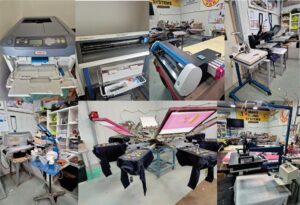
We have Five single station heat transfer machines as well as an automatic three station high volume heat press. To compliment these, we have a Roland Camm 1 Vinyl cutter which provides a wide range of design transfer option for those difficult to print jobs and a digital OKI C711WT polymer printer for rapid one-off jobs. Our Bn20 Roland Camm provided a versatile range of printed vinyl and transfer prints.
Screen vs DTF/Polymer vs Vinyl overview
|
Method |
Best for | Durability | Feel / hand | Setup cost | Ideal order size |
Turnaround |
| Screen Printing | Bulk tees/hoodies and uniforms; simple logos; 1–6 spot colours; consistent re-orders | Excellent (built for regular wear and washing) | Typically the softest feel (ink integrates with fabric) | Higher (screens per colour) | Medium–large runs (best value as quantity increases) | Fast once approved; best when grouped as a production run |
|
DTF (Direct-to-Film) & Polymer Transfers |
Full-colour logos, gradients, photos; fine detail; small runs; mixed garments; many variations | Very good (care matters; great for most apparel) | Slightly raised “badge” feel; excellent detail and colour | Low–medium (minimal setup vs screens) | One-offs to medium runs (great when designs change) | Often quick; great for short deadlines and mixed orders |
|
Vinyl (Heat Transfer) |
Names/numbers; simple shapes; lettering; personalization across items | Good (can lift/crack with harsh care over time) | More “sticker-like”; noticeable edges (best for lettering) | Low (but labour-based for cutting/weeding) | One-offs to small batches (especially personalized items) | Quick for simple jobs; slows down as complexity/personalization increases |